Neurodiversity
Pattern
Project
Achievements
We have published the Neurodivergent Experience Database (Japanese) created through this project. We have also developed a product that integrates these findings with a large language model (currently not publicly available due to the risk of inaccurate AI responses, among other considerations).
The experience materials were created by our association members, drawing on the pattern language methodology advocated by Prof. Takashi Iba of Keio University. The academic outcomes of this project were presented as a paper ("A Pattern Language for Neurodivergent Individuals to Live Authentically") at AsianPLoP, an international conference on pattern languages.
You can see the progress of the project on X (formerly Twitter) via the hashtag #ニューロダイバーシティ・パターン.
We would like to express our sincere gratitude to all the volunteers who participated in the pattern creation process, all interviewees, everyone who provided advice and peer review, and all other contributors.
Overview
Sometimes, it's difficult for a neurodivergent to fight for
environmental accommodation alone in each organization. In addition,
many neurominorities are currently facing countless difficulties which
are complex and hard for some others to understand.
Therefore, we focused on neuro-minorities who have faced difficulties,
but are somehow overcoming them. By extracting and verbalizing the
environment, ingenuity, and culture soome of them experienced in common,
using a technology called "Pattern language," neuro-minorities can move
to a better community (e.g. when going on to higher education or finding
a job). And the organization like companies and schools can also use it
as a tips for improving its environment. Thus, this project will support
neurodiversity-friendly practices, and increase available environmental
options that match each individual's Neurotype. Then, we aim to support
neuro-minorities to live more positive, proud and happy life.
What is pattern language?
Pattern language is a technique for extracting and sharing tips and patterns common to lively great things and practices, which started in the field of architecture and is now applied to various fields (Reference: https://creativeshift.co.jp/english/ ). For example, the Digital Agency of Japan has made the following pattern language: "Towards a Digital Future"
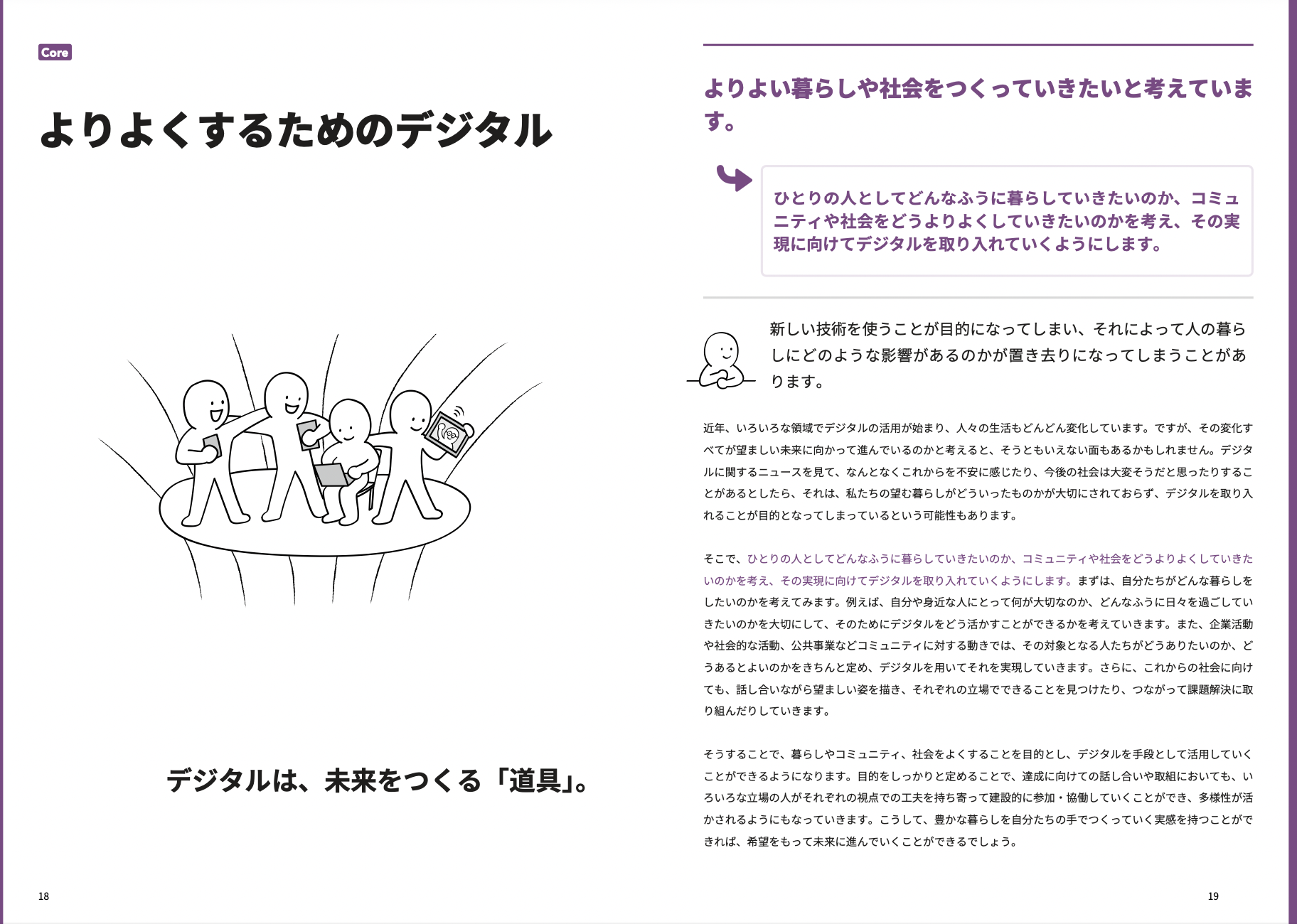
Since the situation of each neurodivergent is too diverse, a practice which have worked well for one neurodivergent may not be transferred to annother. However, the pattern language is devised so that it can be implemented "anytime, anywhere, by anyone." A pattern language is not as concrete as a manual. So it can be adapted to diverse situations and users. Then, various neurodivergents may be able to share good practices.
About the Neurodiversity Pattern Project
Based on the guidance of Prof. Iba and a Academic papers about how to make a Pattern Language, we are making a pattern language related to neurodiversity-friendly practices like the following topics.
- life hacks common in happily living neurodivergents
- Past and present environments common to happily living neurodivergents
- Culture and Behavior of people around happily living neurodivergents
- Communication Strategies of happily living Autistics
- Successful anti-procrastination strategies by ADHDers
Handling of personal information
In this project, personal information is managed in accordance with our privacy policy here. In addition, we may also mention your position or name as a collaborator. But you may also choose not to be listed
Scope of disclosure of information
Information about individual experiences collected in this project will be used to discover "patterns" through analysis and will be anonymized when published. The "pattern language", which systematizes the found patterns, will be published on our blogs, websites, SNS accounts, wiki sites, and others, to be used by anyone who wants to use it. It may also be practiced in our Discord self-help group