For companies working on neurodiversity
We support multinational companies operating in Japan by promoting practical, culturally grounded approaches to neurodiversity in the workplace, contributing to improved inclusion and well-being for neurodivergent individuals.
Utilizing deep insights into neurodiversity gained from our non-profit activities, our operation of one of Japan’s largest neurodivergent communities, and our proprietary pattern language organizing over 1,300 pieces of lived neurodivergent knowledge, we empower neurodivergent talent and support the development of companies that genuinely value neurodiversity.
We have experience delivering presentations in both English and Japanese, and we provide neurodiversity-focused consulting services tailored to corporate needs.
For inquiries or potential collaboration, please contact us via LinkedIn or email us at common@dioden.org.
We aim to create a society where the diversity of neurotype is celebraed
※ For the most up-to-date information, please visit the Japanese version of our website.
Statistics on Current Problems
The monthly income of "developmentally disabled" in "Employment System for Persons with Disabilities (Japan)" is 40% of the average amount, making it difficult for them to live independently. *
Unemployed / Significantly underestimated *
A survey of people with ASD
Suicide rate *
A survey of people with Asperger's Syndrome
Who Have Been Bullied *
A study in Canada found that people on the autism spectrum, especially high-functioning people who "do not need special support," have been bullied. Another study found that autism spectrum disorder and ADHD are much more strongly associated with bullying victimization than other disorders. *
Cases not eligible for support, discrimination, sexual assault...
Then, we launched our NPO because
- We are hard to live
- We feel our neurotype will effect positively and negatively depending on the environment
- We feel the frustration that our Autistic or ADHDic trait which is part of our personality is too disrespected. And we want to live as we are.
This is how Japan Neurodiversity Association started. And...
What is neurodiversity?
Each of us has different Neurotypes (way of cognition and thinking). However, in contrast to such diversity, in modern times
- As a result of optimizing society based only on the Neurotypical, it is becoming difficult for neuro-minorities to live.
- neuro-minorities such as autistic, ADHD, and gifted are unfairly underestimated by single neurotypical value judgment axis, resulting in loss of opportunities for neurominority (and economic loss for society as a whole) *3 *9
- The hardship that neurominorities face due to such friction with society is considered to be a result of defects of "people with developmental disability."
The concept, Neurodiversity was born from the awareness of these problems
Neurotypes, like sexual orientation and race, are an imprortant part of human natural diversity. And people with any Neurotype should be treated with fair respect in society.
This is a new way of thinking (paradigm) and a civil rights movement
that began in the 1990s with people with Asperger's syndrome. This way
of thinking is based on the idea that “difficulties in life lie in
society.” "Social model" is one of the foundations.
In Europe and the United States, measures aimed at securing an environment and measures that match the characteristics of each person from the perspective of neurodiversity and ensuring fair opportunities regardless of characteristics
(Social model)
Philosophy of Japan Neurodiversity Association
We aim to create a society in which people with minor neurological characteristics such as Autistics, ADHD, gifted including 2E can play an active role in their own way, have confidence, and do not have to suffer any more. So we promote neurodiversity to create "a society without disability" In the society,
autistics, ADHDer, gifted, and other minorities are not discriminated structurally or directly in society
We believe that not working on structural changes in society cannot be justified in terms of cost, because considering human neurodiversity has a positive impact on society as well! (For more information, see 6 Proposals for a Society without Disability (Japanese)
Vision
Our goal is to cultivate an environment, culture, and system that recognizes and respects the diverse neurotypes present in each of us. We strive to create a society where individuals, each with their unique neurotypes, can maximize their strengths and support one another in areas of challenge. We believe that we can also build a society capable of adapting and sparking innovation in our ever-changing world by valuing and incorporating our neurodiverse perspectives
And we think that if a society is creating values by celebrating neurodiversity, neurominorities can easily aquire appropriate wages, suitable environments, education, work styles, and job
A theme for all of us
1 in 10 is a neurodivergent!?
According to a survey by the Ministry of Education, Culture, Sports, Science and Technology in Japan, 9.8% of children in the regular class (not the special needs class) are likely to have a "developmental disorder" at the time of the first grade of elementary school. * . And according to a survey in the United States, 11% of children are diagnosed with ADHD. * .
In addition, the tendency of neurominority such as Autistic and ADHD is distributed in a gradation in human beings, and although there are differences in the degree of gradation and the degree of "difficulty in living", everyone has such tendency. Therefore, even if you don't have diagnosed, you may have experienced some difficulties.
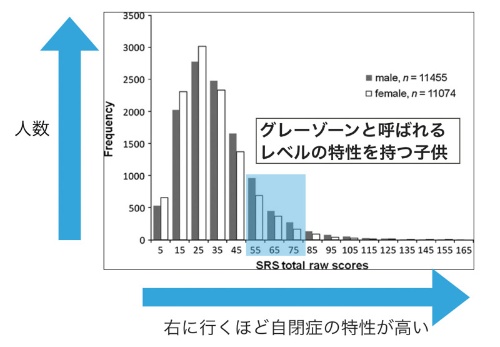
There is no "average brain"
No one should be "average in every aspect" of their various neurological indicators. And to begin with, we all have different brains. DiOEDN believes that we are all “participants” in neurodiversity.
Projects
Neurodiversity pattern project
In this project, we will examine what they are doing, the surrounding environment, and the practice by people around them. So, We aim to support the practice of neurodiversity by pattern language, which can extracte what are common to lively things and utilize them.
Click here for details
Japan's first specialized media for neurodiversity
An online community that you can join anytime, anywhere
Click here for details
A hub of information on "developmental disorders" where everyone can share knowledge
Others
- Official X (Twitter) account (Japanese)
- Official YouTube account (Japanese)
-
Nihonbashi Neurodiversity Project (Japanese):
In order to realize a "society without disability" where neurodiversity is respected, it seems very important to implement the concept of neurodiversity in the workplace so that more neurominority can become economically independent. Therefore, DiODEN supports the Nihonbashi Neurodiversity Project and will explore the possibilities by collaborating with other companies and organizations. - We are planning to start a social start-up for neuro-minorities to be employed in suitable environments with fair wages
Let's create "A society without disabilities" together
In order to realize a society in which current and future neurominority will
no longer suffer from the difficulties, we would like to co-create a Neurodiversity-friendly society
Why don't you join us!
Notes
- There may be other options in the system, but options other than the main ones have various disadvantages and obstacles
-
Average salary.
Source:
https://www.jsh-japan.jp/cordiale-farm/column/845/ -
Source:
https://jp.reuters.com/article/world-work-autismatwork-idJPKCN1SF0WD - Asperger's Syndrome is an obsolete diagnostic term referring primarily to an autism spectrum disorder without intellectual or language delays.
-
66% of participants had suicidal thoughts
Source:
http://www.qlifepro.com/news/20140724/suicide-risk-in-adults-with-aspergers-syndrome.html -
Source:
http://www.qlifepro.com/news/20140724/suicide-risk-in-adults-with-aspergers-syndrome.html -
Source:
https://theconversation.com/kids-on-the-autism-spectrum-experience-more-bullying-schools-can-do-something-about-it-184385 -
Source:
https://jamanetwork.com/journals/jamapediatrics/fullarticle/2792743 -
Source:
https://www.nri.com/-/media/Corporate/jp/Files/PDF/knowledge/report/cc/mediaforum/2021/forum308.pdf?la=ja-JP&hash=FC080EBB30D008E42C64626993EF00D93E87AC95 -
Since the ratification of the Convention on the Rights
of Persons with Disabilities in 2014, there has been a shift in the
concept of 'disability' to the perspective of a 'social model'."
Source:
https://fin.miraiteiban.jp/neurodiversity/ -
Source:
Ministry of Health, Labor and Welfare: “[Document 3] Current status of support for children with disabilities”
https://www.mhlw.go.jp/content/12401000/000791880.pdf p.7 -
Source:
TEENS
https://www.teensmoon.com/pdd/data/